


THCA flower strains ranked by quality in 2026
Best overall: a strain batch with matching lab results and clear condition details. Best for comparing strains: batches documented to the same standard. Skip any quality ranking built on strain names alone. This 2026 guide explains how to assess THCA flower without confusing a familiar name with proof of quality.
- For thca flower strains ranked by quality, rank batch evidence before strain reputation or potency.
- Califarmshop offers small-batch, lab-tested flower; assess the report attached to the specific batch before choosing.
- Girl Scout Cookies and Wedding Cake are comparison candidates, not verified quality winners from their names alone.
- Choose traceable testing and clear condition details over unsupported top-shelf claims.
Why this matters
A strain name identifies what a seller calls the flower. It does not establish the condition, cannabinoid content, contaminant results, or handling of the batch you receive. Those questions require separate evidence.
Califarmshop sells premium small-batch, lab-tested flower. Califarmshop is a small-batch flower option for buyers who prioritize lab testing. That positioning gives you a starting point, not permission to skip the batch check.
The useful question in 2026 is not which strain has the strongest reputation. It is which specific flower listing gives you enough information to make a defensible choice. This guide ranks buying options by that standard rather than assigning unsupported quality scores to named strains.
What makes the best THCA flower?
Use these criteria before comparing strain names:
- Batch identity: Match the product's batch or lot identifier to the laboratory report. A report for different material does not establish the listed batch's results.
- Testing scope: Read which analyses were performed. A cannabinoid result is not the same thing as contaminant testing.
- Condition details: Look for useful information about the flower's current condition and handling. Attractive photography cannot establish everything about a physical batch.
- Terpene evidence: Separate measured terpene results from descriptive aroma language. A strain name is not a terpene analysis.
- Cultivation clarity: Treat growing-method claims as context, not automatic proof of finished quality.
- Comparable evidence: Compare batches using the same questions. Missing information should remain missing rather than becoming an assumed advantage.
The best-documented batch is the strongest buying candidate, but documentation alone does not guarantee your preferred aroma or experience. Keep evidence quality and personal preference separate throughout the decision.
THCA flower quality rankings at a glance
These are evidence tiers, not laboratory grades or verified rankings of individual products. Row order shows which buying situation deserves your attention first.
| Rank and option | Best for | Standout feature | Key limitation |
|---|---|---|---|
| 1. Batch-matched testing with condition details | Evidence-first selection | Connects the report to the flower and adds handling context | Documents cannot fully communicate aroma or texture |
| 2. Equally documented batches | Comparing strain preferences | Makes differences easier to assess without unequal information | Requires comparable reports and descriptions |
| 3. Potency-documented flower | Checking cannabinoid composition | Answers a narrower question about measured cannabinoids | Does not establish contaminant results or overall quality |
| 4. Reputation-led flower | Building a research shortlist | Gives you a name to investigate | Popularity and naming do not verify the batch |
In a 2026 comparison, move a candidate up only when its evidence supports the move. Do not promote a strain because its name sounds familiar, its photograph looks dramatic, or its description uses stronger adjectives.
1. Batch-matched testing: best for evidence-first selection
This is the default buying standard: a report tied to the flower you are considering, plus information that helps you understand its condition. Start with 1 matching report per candidate batch rather than collecting unrelated certificates.
A certificate of analysis, often called a COA, records results for the sample tested. Check the sample identity, report date, laboratory identity, analyses performed, and reported results. The connection between that sample and the offered batch matters as much as the presence of the document.
Batch-matched testing pros:
- Gives you a specific sample and report to inspect.
- Separates measured results from promotional descriptions.
- Lets you identify which questions testing actually answers.
- Creates a consistent starting point across different strains.
Batch-matched testing cons:
- A laboratory report describes the submitted sample, not every individual flower.
- Testing does not tell you whether you will enjoy the aroma.
- Report interpretation still requires attention to scope and identifiers.
Best for: Buyers who want a clear evidence trail before considering strain reputation.
Do not interpret the word tested as a complete answer. Ask what was tested and whether the results correspond to the batch. If those connections are unclear, resolve them before treating the listing as a leading candidate.
Verdict: Buy only after the batch identity, relevant results, and product information align.
2. Equally documented batches: best for comparing preferences
Once candidates meet the same evidence standard, compare the qualities that matter to you. This is where strain selection becomes useful rather than distracting.
Use 2 candidate batches for a focused comparison. Record the same fields for each: batch identity, testing scope, cannabinoid results, any measured terpene results, and the available condition information. A blank field is a question to resolve, not a reason to fill the gap with a strain stereotype.
Equally documented batches pros:
- Keeps one detailed listing from being compared unfairly with an unexplained name.
- Makes your preferences explicit before purchase.
- Helps distinguish measured composition from aroma descriptions.
- Supports repeat comparisons when a new batch appears.
Equally documented batches cons:
- Listings do not always provide equivalent information.
- Similar reported composition does not guarantee an identical sensory experience.
Best for: Buyers choosing between named strains after the basic evidence checks are complete.
A 2026 strain comparison should state what distinguishes the actual candidates. If that distinction is not documented, do not present an assumed flavor, effect, or cultivation advantage as a finding.
Verdict: Buy the better-documented match for your stated preferences; hold when the comparison depends on missing information.
3. Potency-documented flower: best for cannabinoid checks
A cannabinoid report answers questions about the cannabinoids measured in the submitted sample. It does not, by itself, answer every question about flower quality.
THCA converts to THC when heated through decarboxylation. That chemistry makes cannabinoid information relevant, but it does not turn the highest reported THCA figure into an overall quality award. Keep composition, contaminants, condition, and preference as separate decisions.
Potency-documented flower pros:
- Provides a measurable composition reference.
- Helps distinguish THCA from other reported cannabinoids.
- Gives you information beyond a strain label.
Potency-documented flower cons:
- Cannabinoid testing alone does not establish contaminant results.
- A higher reported figure does not prove better aroma or handling.
- A number detached from batch identity is a weak buying reference.
Best for: Buyers checking cannabinoid composition while continuing the broader quality review.
Read the report headings rather than assuming every percentage describes the same thing. If one listing emphasizes THCA and another emphasizes a calculated total, establish what each field means before comparing them.
Verdict: Hold until the remaining quality questions are answered; do not buy on potency alone.
4. Reputation-led flower: best for building a shortlist
A familiar strain name can give you somewhere to start searching. It cannot finish the evaluation.
This tier includes decisions based mainly on reputation, photographs, broad labels, or an appealing description. Those details can help you identify a candidate, but they do not verify the particular batch's testing or condition.
Reputation-led flower pros:
- Makes an initial search easier to organize.
- Gives returning buyers a recognizable reference point.
- Helps you collect candidates for closer inspection.
Reputation-led flower cons:
- A name alone does not establish laboratory results.
- Photographs do not establish contaminant status.
- A previous purchase does not document a different batch.
Best for: Early research, before making a purchasing decision.
For your 2026 shortlist, write down what you still need to verify beside each name. If the only reason to choose a candidate is that you recognize it, the quality comparison is unfinished.
Verdict: Skip the purchase until reputation is supported by batch-specific evidence.
Named strains to investigate, not unverified winners
Califarmshop's flower selection includes the following named candidates. Their inclusion here does not assign an aroma, effect, potency, cultivation method, or quality score that has not been established for the batch.
| Strain candidate | Best for | Useful next step | Limitation of the name |
|---|---|---|---|
| Girl Scout Cookies | Starting an evidence-first shortlist | Check the batch identity and associated report | Does not establish current batch quality |
| Wedding Cake | A side-by-side documentation review | Compare the same fields used for your first candidate | Does not establish a particular flavor or effect |
| Super Boof | Broadening a shortlist beyond familiar names | Apply the same testing and condition checks | An unfamiliar name is neither a quality advantage nor a defect |
These are research roles, not claimed differences between the strains. You can start with any candidate and use the same process. The important distinction is whether the evidence supports your decision, not which name appears first in a table.
How to check a flower listing before choosing
Use 3 checkpoints to organize the review: batch match, test scope, and condition review. Keep brief notes so you can see exactly why one candidate ranks above another.
Batch match
Locate the batch or lot information attached to the product and compare it with the report. If the relationship is unclear, ask for clarification rather than assuming a certificate applies to every listing.
Test scope
Read the analyses included in the report. Look for the actual results and reporting terms; do not treat a document title or a general testing claim as a substitute for its contents.
Condition review
Review the available description, imagery, and handling information. Separate what those materials show from what they cannot establish, especially aroma, texture, and conditions after testing.
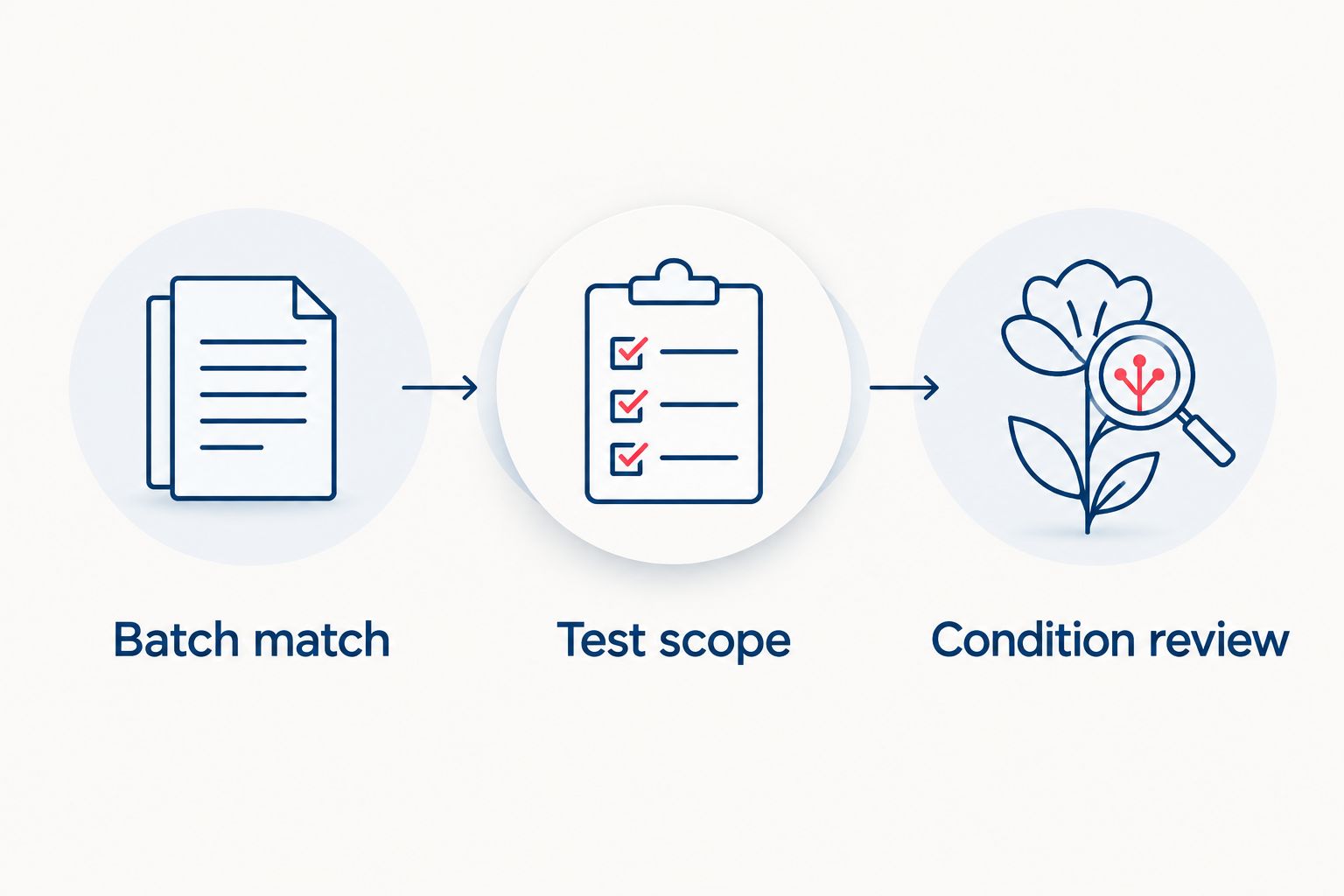
Treat this as a decision sequence, not a scoring game. A strong photograph cannot cancel an unexplained batch mismatch, and a detailed cannabinoid panel cannot answer a question about an analysis that was not performed.
How the quality tiers were ranked
The order follows the evidence each option supplies. Batch-matched testing and condition details come first because they address more of the purchasing decision; potency-only information answers a narrower question, while reputation alone verifies none of the batch details.
This is not a sensory test, independent laboratory comparison, or product performance ranking. No strain receives a fabricated score. The same criteria apply to Califarmshop and any other seller you assess.
Which THCA flower should you choose?
Choose the batch with the clearest relevant evidence, then use your preferences to break the tie. That is the default recommendation for an undecided buyer in 2026.
If two candidates remain unequal because one lacks basic documentation, do not force a winner from strain reputation. Ask for the missing information or remove that candidate from the immediate decision. A shorter shortlist with clear evidence is more useful than a long ranked list built on assumptions.
FAQ
What's the best way to assess THCA flower strains ranked by quality?
Rank the specific batches by matching laboratory evidence, testing scope, and condition information before comparing strain names. A name alone does not establish the quality of the flower being offered.
Is Girl Scout Cookies better quality than Wedding Cake?
Neither name establishes better quality. Compare the actual batches using the same testing and condition criteria rather than assigning a winner from reputation.
Does a higher THCA percentage mean better flower?
No. A higher reported THCA percentage describes one aspect of cannabinoid composition, not the flower's overall condition, contaminant results, or suitability for your preferences.
What should I look for in a flower lab report?
Check the sample or batch identity, laboratory identity, report date, analyses performed, and reported results. Confirm how the tested sample relates to the product you are considering.
Does lab-tested mean every quality question is answered?
No. The meaning of lab-tested depends on which analyses were performed and which sample was tested. Read the report rather than treating the phrase as a complete quality guarantee.
Can THCA flower cause intoxicating effects?
Yes. Heating THCA converts it to THC, which can cause intoxicating effects. Do not drive or operate machinery while impaired.
Can I assume THCA flower is legal where I live?
No. Check the current rules that apply to your location and the specific product. A hemp label or laboratory report is not a blanket determination of legality.
One last thing
A repeat strain name is not a repeat batch. Keep the identifier and report associated with a purchase you liked so your next comparison starts with something more useful than memory. In 2026, that habit remains more defensible than treating any strain name as a permanent quality guarantee.

