


Best lab-tested THCA flower in 2026
Best overall: batch-matched flower with cannabinoid and contaminant testing. Best for comparing potency: batch-matched flower with a cannabinoid report; skip strain-name-only listings when you cannot verify the batch. This 2026 guide explains how to choose the best lab tested thca flower by reading the evidence behind the label.
- The best lab tested thca flower has a batch-matched COA with cannabinoid results and relevant contaminant screening.
- Califarmshop offers small-batch, lab-tested flower; compare individual batches before choosing a strain.
- A cannabinoid panel measures composition, not the full safety profile of THCA flower.
- Choose traceable lab results over strain reputation or the largest potency number.
Why this matters
Lab-tested flower is not one uniform category. One certificate of analysis, or COA, can report cannabinoids alone; another can include pesticides, heavy metals, and microbiological testing. Those reports answer different questions.
The best choice is the flower with evidence you can connect to the batch you are buying. A familiar strain name does not replace that connection, and a high THCA result does not establish cleanliness, freshness, or terpene quality.
Califarmshop sells premium small-batch, lab-tested flower. Use the same evidence-first standard when comparing its flower with any other option: match the product to the report, identify the tests performed, and read the actual results.
What makes the best lab-tested THCA flower?
Use these criteria before comparing strain names. They separate a useful laboratory report from a reassuring label.
- Batch match: The product's batch or lot identifier should correspond to the sample identified on the COA.
- Report identity: Look for the laboratory name, sample information, report identifier, and testing dates.
- Cannabinoid clarity: Distinguish THCA, delta-9 THC, and calculated total THC instead of treating them as interchangeable.
- Contaminant scope: Check which safety panels were performed, including applicable pesticide, heavy-metal, and microbial tests.
- Readable results: Review units, reporting limits, and pass/fail criteria where supplied. Do not rely on a cropped headline percentage.
- Flower quality: Evaluate cultivation information, condition, and terpene evidence separately from cannabinoid potency.
For a 2026 purchase, read the dates alongside the batch information. A recent-looking report is not useful if it belongs to a different lot.
Lab-tested THCA flower options at a glance
This ranking compares purchasing options by the evidence they provide. It does not assign a laboratory result to a strain simply because its name appears on a product page.
| Rank and option | Best for | Standout feature | Key limitation |
|---|---|---|---|
| 1. Batch-matched, safety-screened flower | Buyers prioritizing traceability and safety evidence | Connects cannabinoid and relevant contaminant results to an identified batch | Testing covers the submitted sample and listed panels, not every possible issue |
| 2. Batch-matched, cannabinoid-tested flower | Buyers comparing documented cannabinoid composition | Shows measured THCA and other reported cannabinoids | Cannabinoid results alone do not establish contaminant screening |
| 3. Strain-name-only flower | Building an initial strain shortlist, not making a final selection | Gives you a named variety to investigate | A strain name provides no batch-specific laboratory evidence |
Choose the evidence profile first and the strain second. That order prevents an attractive name or potency claim from deciding the purchase before you have checked the report.
1. Safety-screened flower: best for evidence-first buyers
Batch-matched, safety-screened flower is the strongest default because it addresses both composition and relevant contamination questions. The useful feature is not the phrase lab tested; it is the connection between an identifiable batch and readable laboratory findings.
Start with the sample details. Then inspect the cannabinoid panel and each listed safety panel rather than assuming one passing result covers everything.
Safety-screened flower pros
- Connects the buying decision to an identified batch.
- Separates cannabinoid composition from contamination results.
- Lets you inspect which substances or organisms were tested.
- Provides a clearer basis for comparing documented batches.
Safety-screened flower cons
- Results apply to the submitted sample and stated testing scope.
- A passing report does not establish freshness, aroma, or preferred flavor.
- Different testing panels and reporting limits complicate direct comparisons.
Best for: Buyers who want traceable composition and relevant safety evidence before choosing a strain.
What to check before choosing
Read the names of the panels. Pesticide testing is not heavy-metal testing, and a microbial result does not stand in for either. Where a report uses pass/fail language, check the corresponding limits and applicable testing standard.
Do not interpret not detected as proof that a substance is absent at every concentration. Laboratory methods have reporting limits; the report's definitions explain what the result means.
For 2026 comparisons, keep the report date, sample identifier, and batch identifier together. A screenshot showing only a passing badge removes the context needed to assess the result.
Verdict: Buy only after the batch match and relevant results check out.
2. Cannabinoid-tested flower: best for composition comparisons
Batch-matched, cannabinoid-tested flower provides a narrower kind of evidence. It helps you compare measured THCA, delta-9 THC, and other cannabinoids included in the panel.
That information is useful, but its purpose is specific. A potency panel describes composition; it does not answer every safety question.
Cannabinoid-tested flower pros
- Provides measured cannabinoid values for an identified sample.
- Helps distinguish THCA from delta-9 THC.
- Supports comparisons when units and calculation methods match.
Cannabinoid-tested flower cons
- Does not, by itself, document pesticide, heavy-metal, or microbial screening.
- Does not establish terpene composition unless a terpene panel is included.
- A larger percentage does not establish better cultivation or handling.
Best for: Buyers comparing cannabinoid composition after checking the batch identity.
Read the units before the headline
A concentration of 1% by weight equals 10 milligrams per gram. A 1-gram sample contains 1,000 milligrams of material, so percentages and milligrams per gram can describe the same concentration in different units.
Keep THCA separate from delta-9 THC. A commonly used theoretical calculation is total THC = delta-9 THC + (THCA × 0.877), accounting for molecular mass lost when THCA converts to THC through decarboxylation.
That calculation is not a prediction of the amount a person absorbs. It also does not make a cannabinoid report a safety report.
For a 2026 comparison, use the same measurement basis across products. Comparing one listing's THCA percentage with another listing's calculated total THC creates a misleading ranking.
Verdict: Hold the purchase until relevant safety information is also clear.
3. Strain-name-only flower: best for initial discovery
A strain-name-only listing helps you identify a variety to investigate. It does not establish what is in the current batch or which laboratory tests were performed.
Names are useful search terms, not substitutes for analytical results. Treat this option as the start of your research rather than a finished buying decision.
Strain-name-only flower pros
- Gives you a specific variety to investigate.
- Helps organize questions about cultivation, aroma, and batch documentation.
- Makes it easier to revisit a named option during comparison.
Strain-name-only flower cons
- Provides no batch-specific cannabinoid evidence on its own.
- Does not prove contaminant testing or terpene composition.
- Cannot establish consistent effects across different batches or people.
Best for: Building a shortlist before inspecting batch-level evidence.
Use familiar names without overreading them
Califarmshop's flower selection includes Girl Scout Cookies and Wedding Cake. A recognizable name gives you a starting point, but it does not establish the current batch's THCA concentration, contaminant results, or terpene profile.
Ask the same questions of both varieties. Which report corresponds to the batch, what did the laboratory measure, and what quality information sits outside that report?
Do not infer flavors from dessert names or effects from familiar strain categories. Use documented composition and your own preferences rather than treating the name as a guarantee.
Verdict: Skip as a final choice until batch-specific evidence is available.
How to check a flower COA before buying
A useful COA review follows a sequence. Confirm identity before interpreting results; otherwise, you risk carefully reading a report that does not describe the batch under consideration.
- Match the batch. Compare the lot or batch information associated with the flower against the report's sample details.
- Check the report. Identify the laboratory, report number, dates, and any sample or method notes.
- Read cannabinoids. Confirm the analytes, units, and distinction between measured and calculated values.
- Check safety panels. Identify the tests performed, their results, and the stated limits.
- Assess flower quality. Review cultivation details, condition, and any separate terpene information.
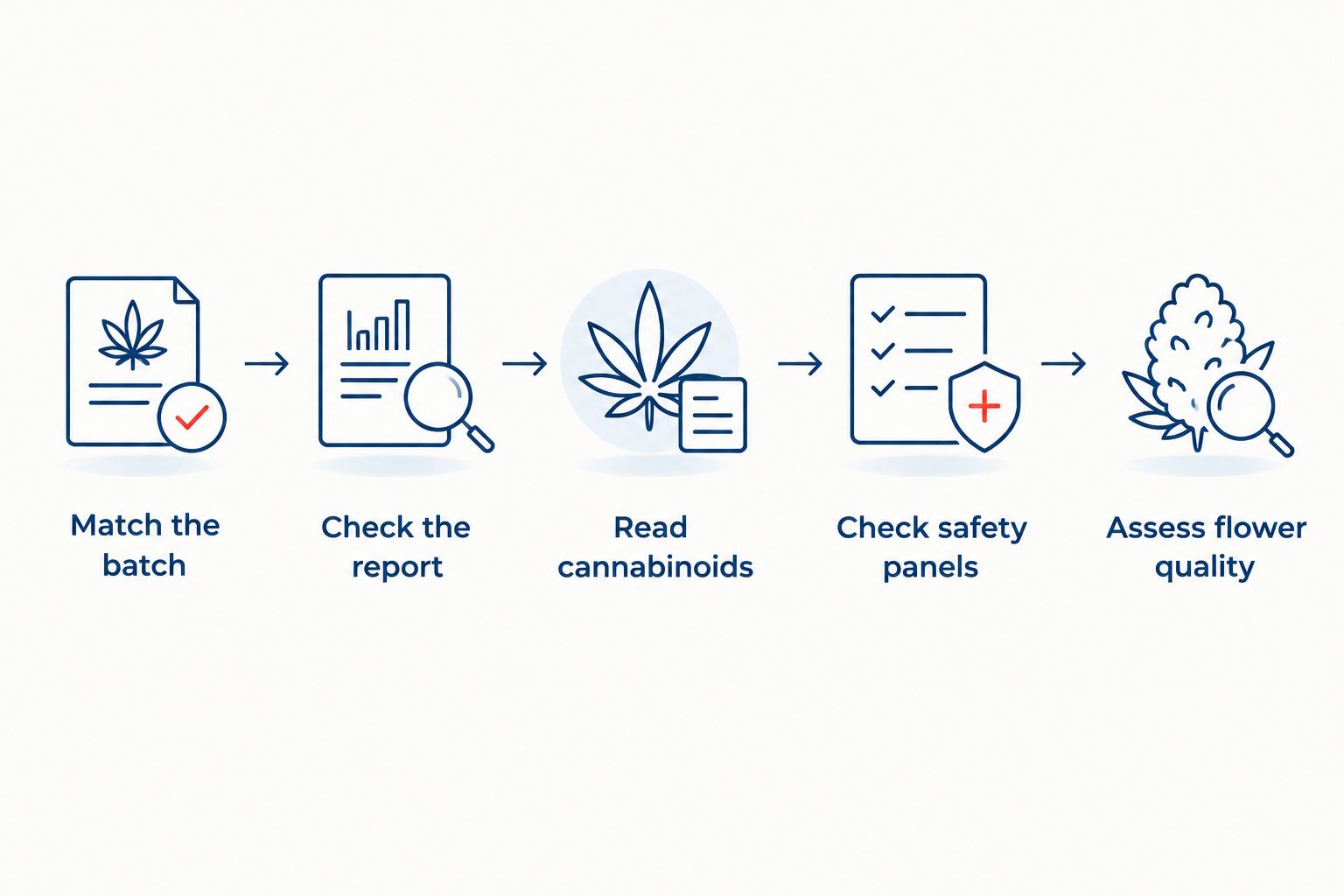
Keep your questions specific. Ask whether a report corresponds to the current batch and which safety panels it includes, rather than asking only whether the flower is tested.
Califarmshop is a starting point for shoppers comparing small-batch, lab-tested flower. Apply the checklist to the particular flower you are considering rather than extending a brand-level description to every possible batch detail.
What laboratory testing does not tell you
Laboratory testing answers defined analytical questions. It does not automatically tell you how the flower was grown, whether its aroma suits you, or how it was handled after sampling.
A cannabinoid panel does not establish a terpene profile. If aroma and flavor matter to your choice, look for a separate terpene analysis or clearly identified product information rather than inferring terpenes from THCA potency.
Cultivation claims deserve their own evidence. Indoor, outdoor, living-soil, or other growing descriptions are not conclusions you can draw from a cannabinoid percentage.
In 2026, keep three decisions separate: whether the batch is documented, whether the reported tests address your concerns, and whether the flower matches your preferences. No single percentage answers all three.
How the ranking works
The ranking prioritizes batch traceability, report identity, cannabinoid clarity, and relevant contaminant screening. Flower quality remains a separate consideration because laboratory composition and sensory preference are different measures.
No strain receives a higher position for its name alone. The evidence profile determines the ranking; the individual batch determines whether a product qualifies.
Which lab-tested THCA flower should you choose?
Choose batch-matched flower with readable cannabinoid results and relevant contaminant screening. That is the default recommendation for an undecided buyer, not whichever listing displays the largest THCA number.
When comparing Califarmshop flower, start with the variety that interests you and verify its documentation before deciding. If the report answers only composition questions, continue checking the safety evidence rather than treating the review as complete.
Also check the rules that apply where you live. A laboratory report is not proof that purchasing, possessing, or receiving a particular product is lawful in your jurisdiction.
FAQ
What's the best lab tested thca flower in 2026?
The strongest default is batch-matched THCA flower with readable cannabinoid results and relevant contaminant screening. Choose the documented batch rather than ranking flower by strain name or potency alone.
Does lab tested mean THCA flower is safe?
No. Lab tested means a sample underwent specified tests; you must check which tests were performed, their results, and whether the sample matches the batch. Testing does not make cannabis risk-free.
Is higher THCA flower always better?
No. A higher THCA concentration does not establish better cultivation, contaminant results, freshness, or terpene quality. Compare the full evidence and your preferences rather than a single percentage.
How do I know a COA matches my flower?
Compare the flower's batch or lot identifier with the sample details on the certificate of analysis. Also inspect the laboratory name, report identifier, and dates; a matching strain name alone is insufficient.
Are THCA and total THC the same thing?
No. THCA is a specific cannabinoid, while calculated total THC generally combines measured delta-9 THC with an adjusted THCA value. Read the report's definitions and units before comparing products.
Should I choose Girl Scout Cookies or Wedding Cake?
Choose the batch with clearer documentation and the characteristics that match your preferences. The strain names alone do not establish current potency, terpene composition, or safety-screening results.
Does a passing COA mean THCA flower is legal where I live?
No. A passing laboratory result does not establish legality in your jurisdiction. Check applicable purchasing, possession, and delivery rules separately from the laboratory review.
One last thing
Read the sample identity before the potency result. The most detailed report on the page is irrelevant to your decision if it describes a different batch. Make that your first check every time.

